A CRO’s Guide to LinkedIn
A practical LinkedIn guide for CROs: four content categories, a four-give/one-ask rhythm, customer stories and lead magnets that create sales conversations.
The problem with most sales leaders is that they think about content from a sales perspective. They start with the question, “How can I drive more leads?”
That usually turns into a series of posts saying some version of: “Here’s why our product is the best. Here’s why you should buy it. Here’s another reason to book a demo.”
You can see why people scroll past. Their feed is already full of people trying to sell them something.
Throughout this year, our agency has worked closely with Ghazi Masood, CRO at Replit, and Chris Mills, CRO at ID.me.
We’ve driven pipeline and impressions by going beyond the products they sell. The content falls into four categories:
1. Personal content
Your career, family, mistakes and experiences outside work. These stories help people get to know the person behind the title and give them something to relate to.
2. Company content
What’s happening inside your business. Customer wins, team milestones, difficult decisions and the thinking behind what you’re building. Give people a reason to care about the company beyond its feature list.
3. Leadership content
How you hire, coach, handle disagreements and make decisions. You’ve probably learned things the hard way that another sales leader is dealing with right now. Share the experience and what you learned from it.
4. Technical content
How your product helps someone solve a real problem. Explain what the customer was struggling with, how they used the product and what changed afterward.
5. Bonus (go to the end to see).
There’s room for all of these on a CRO’s profile. The mistake is letting every category turn into another product pitch.
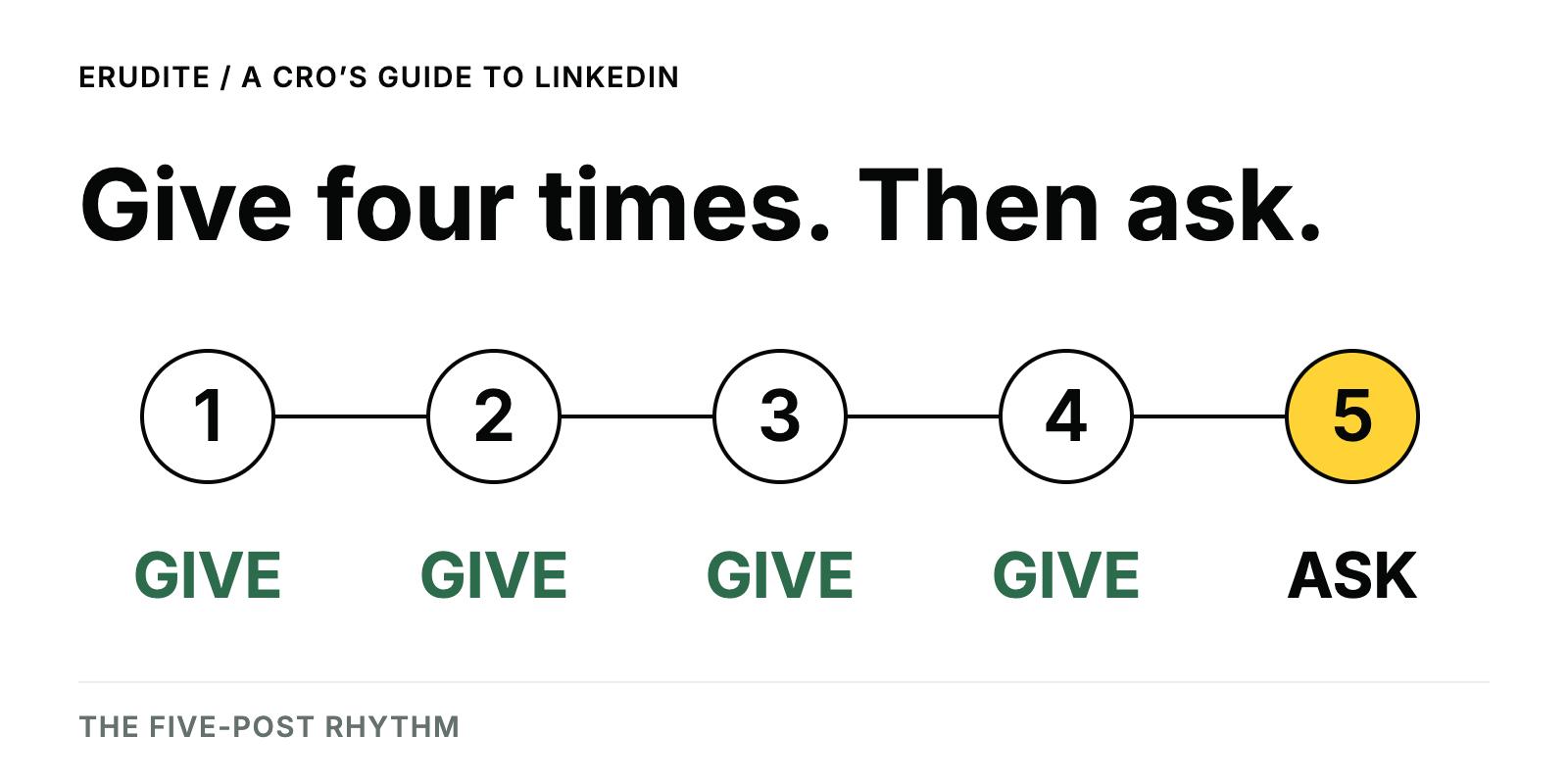
Give, give, give, give, take.
For every five posts you publish, four should give your audience something: a story, useful advice, a reason to smile or something that pulls at their heartstrings.
The fifth can be an ask. Give someone a clear reason to reach out, try the product or start a conversation.
For example, your next five posts could look like this:
- How I got into sales.
- A conflict between my CEO and me that we resolved in an unconventional way.
- Why my wife hates it when I travel, and the changes I’ve made for her.
- How to hire high-performing sales talent.
- How [customer] [benefited from our solution] in [X] days, and how you can benefit too.
By the fifth post, someone has had a chance to understand who you are, how you think and whether your advice is useful. There’s some familiarity behind the ask.
You’re also giving people several reasons to follow you. Someone might discover you through a hiring lesson, relate to a family story and eventually recognize a problem your product solves.
Write every post as a story.
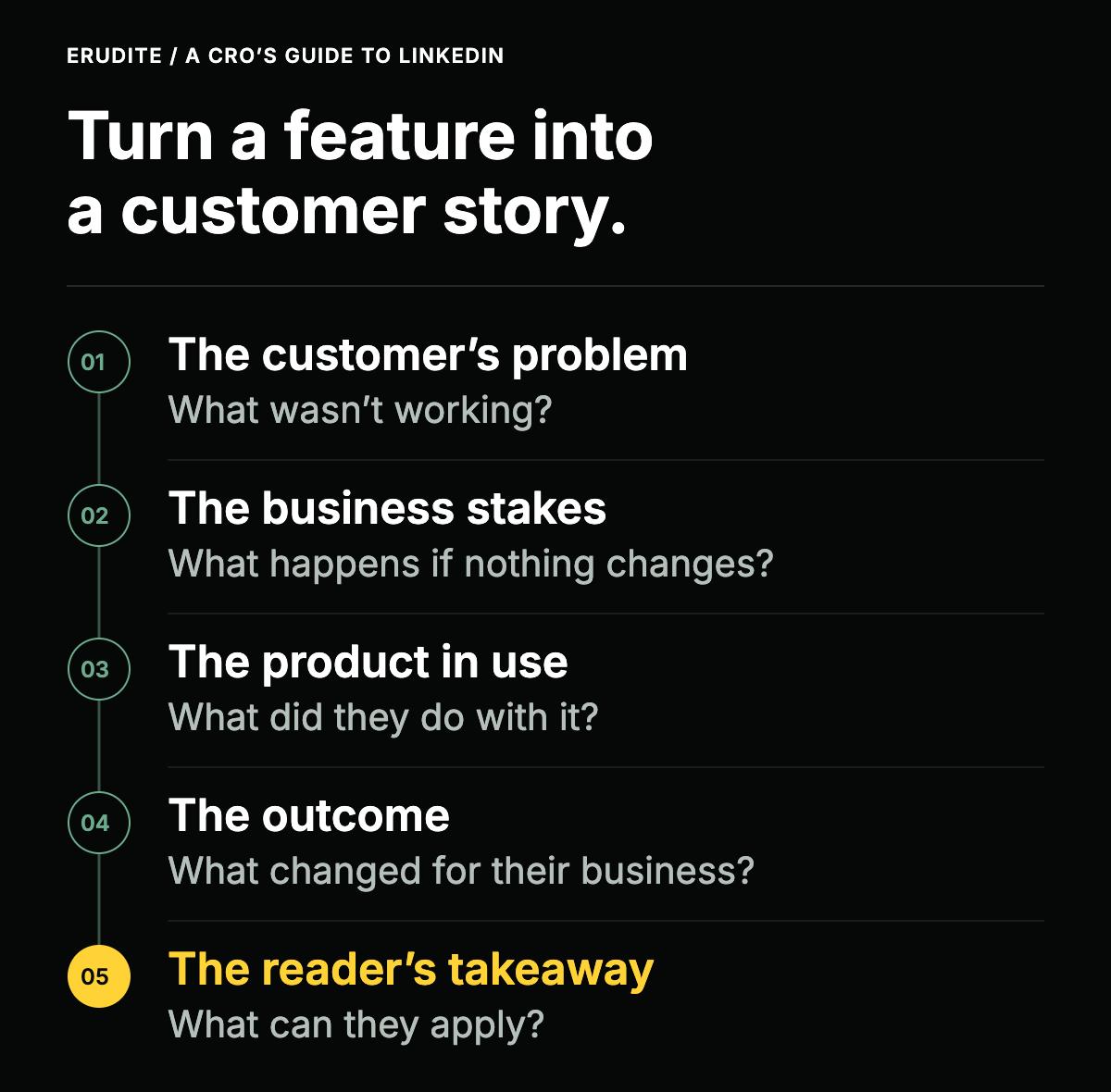
Give the reader a person to follow, a problem to care about and a consequence if nothing changes.
If you’re writing about a technical feature, explain how a customer used it to solve a problem in their business. What was happening before they found you? Who was dealing with it? What would have happened if they’d left it unresolved?
Then walk through what they did and what changed.
A feature description gives someone information. A customer story gives them enough context to understand why that information matters to their own business.
Your posts should feel like little books. There’s a situation, some tension and a reason to keep reading. Think about how a good TV script makes you want to know what happens next.
You can do that with an interview, a difficult hiring decision or a customer problem. You don’t need to turn your LinkedIn profile into a technical manual.
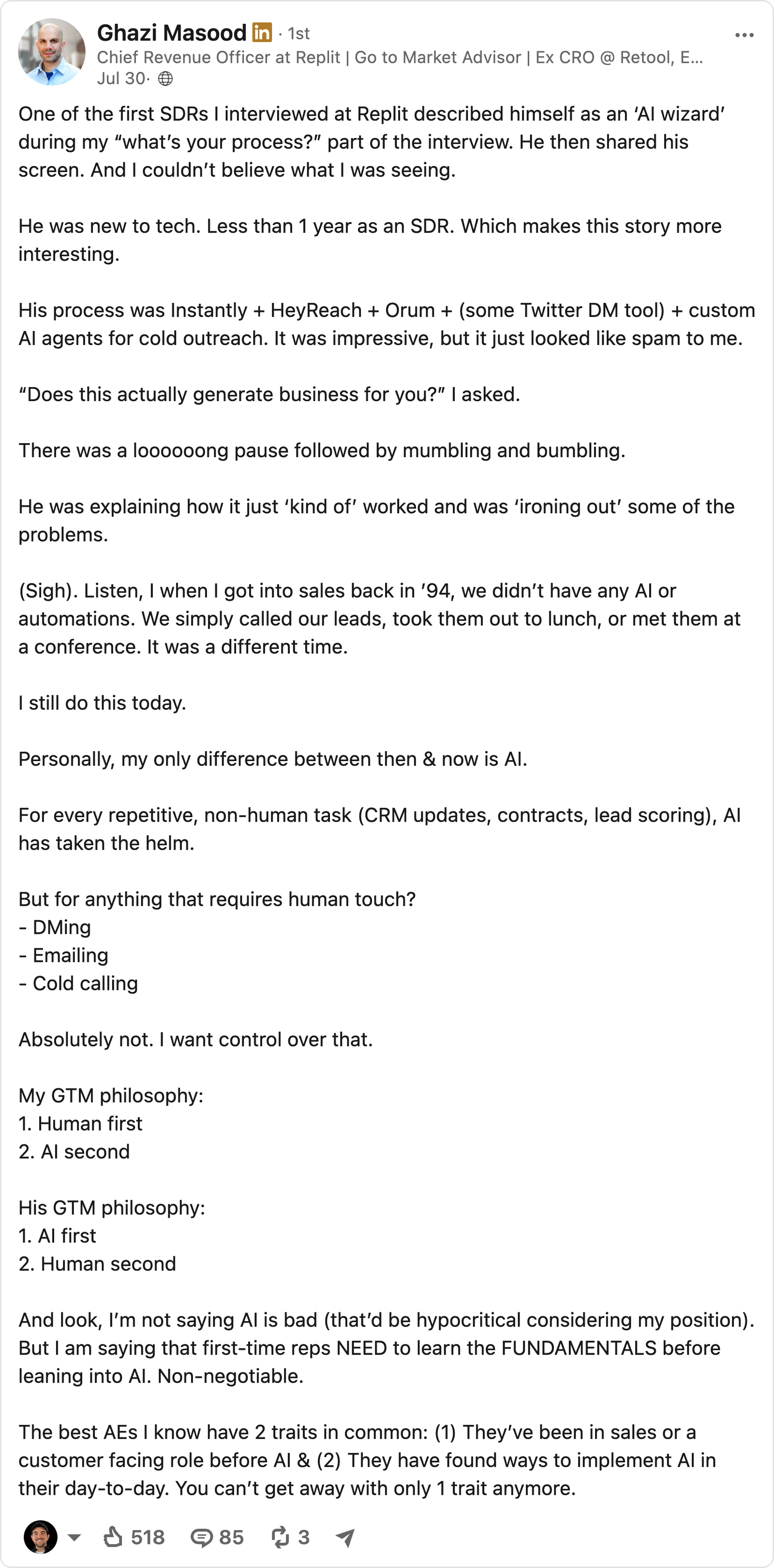
Here’s a post we wrote for Ghazi about interviewing an SDR who described himself as an “AI wizard.”
The interview gives the reader a scene to follow. Ghazi’s opinion about sales fundamentals comes through as he explains what happened.
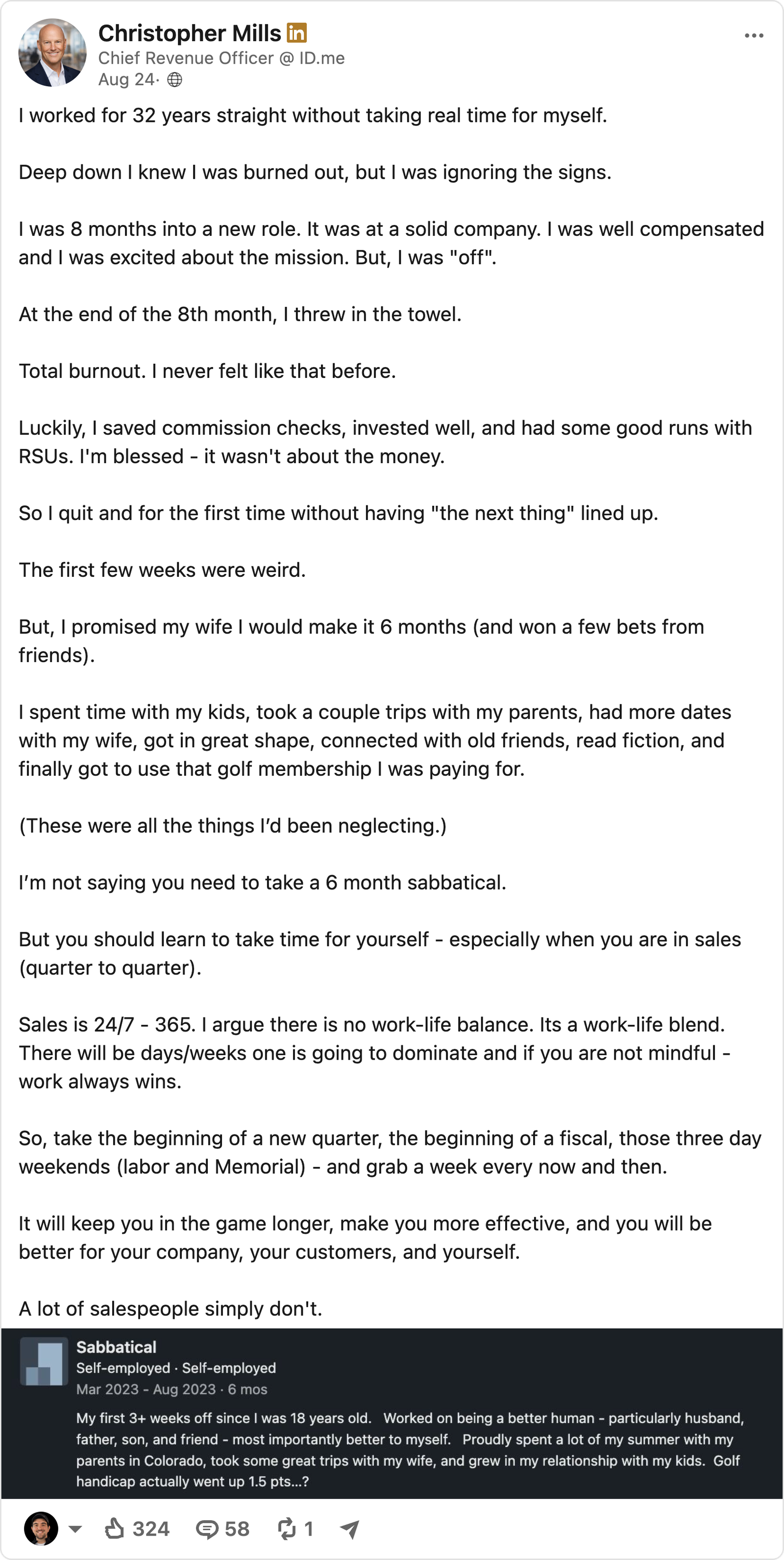
And here’s Chris talking about burnout and taking a sabbatical.
He explains the decision, how uncomfortable it felt and what he did with the time. The advice about looking after yourself means more because you’ve read the experience behind it.
You’ve made it this far, so you might still be wondering about the fifth category.
Lead magnets.
Lead magnets don’t perform as well as they used to, particularly the familiar “comment a keyword and I’ll send you a resource” posts. We’ve covered that in our article on declining LinkedIn reach, so we won’t spend this entire guide on it.
But if you want one to work, give away something big enough that your audience actually wants it.
We work with Nikita at Maildoso. In one of his giveaway posts, the offer was 300 SMTP inboxes, free for 30 days.
Readers were asked to like the post, comment “SMTP” and connect with him. The Maildoso team would follow up within 24 hours.
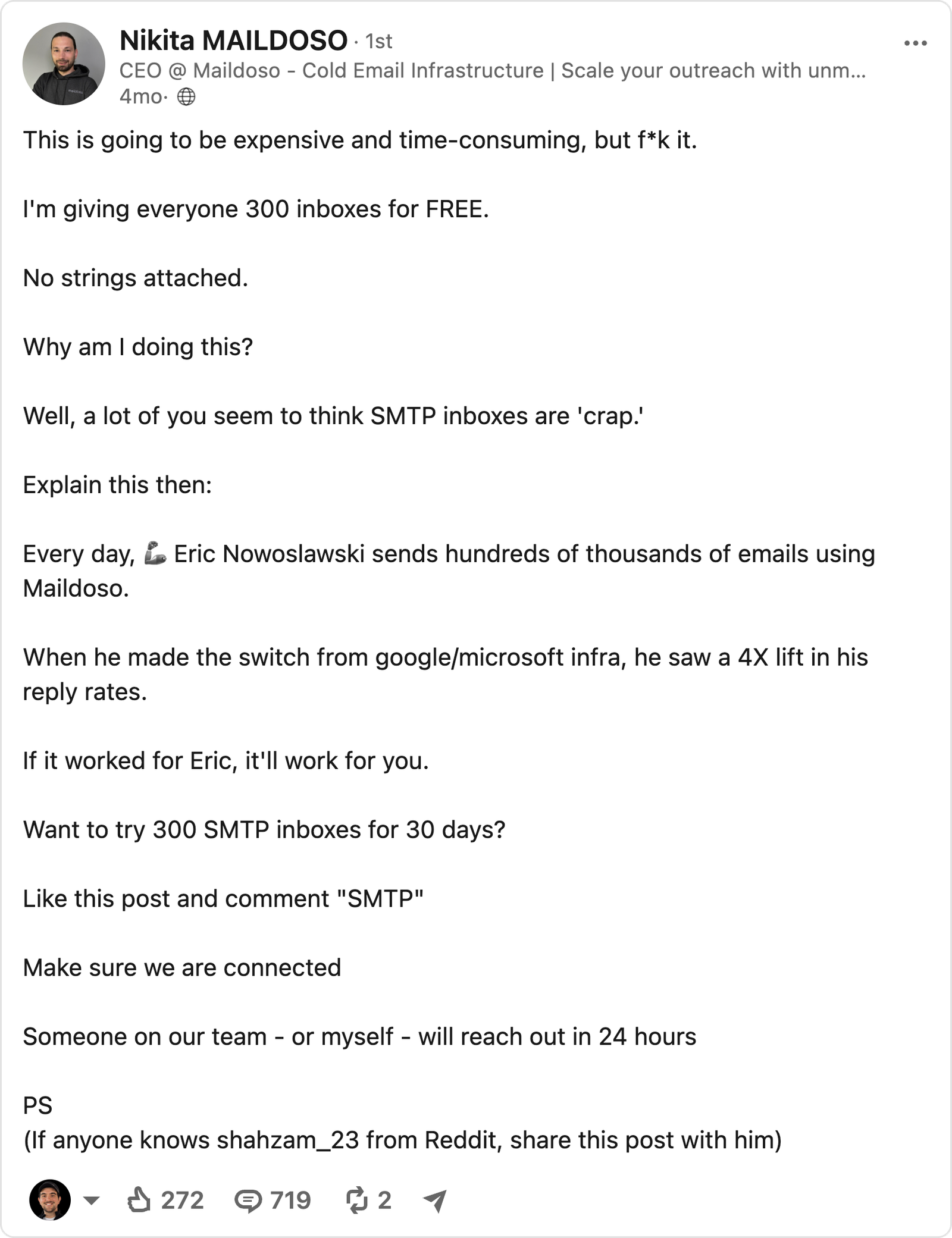
For someone running cold email, that’s an offer they can put to work. They can test the infrastructure in their own operation and form an opinion from using it.
The post recorded 719 comments. Here’s a look at some of the requests:
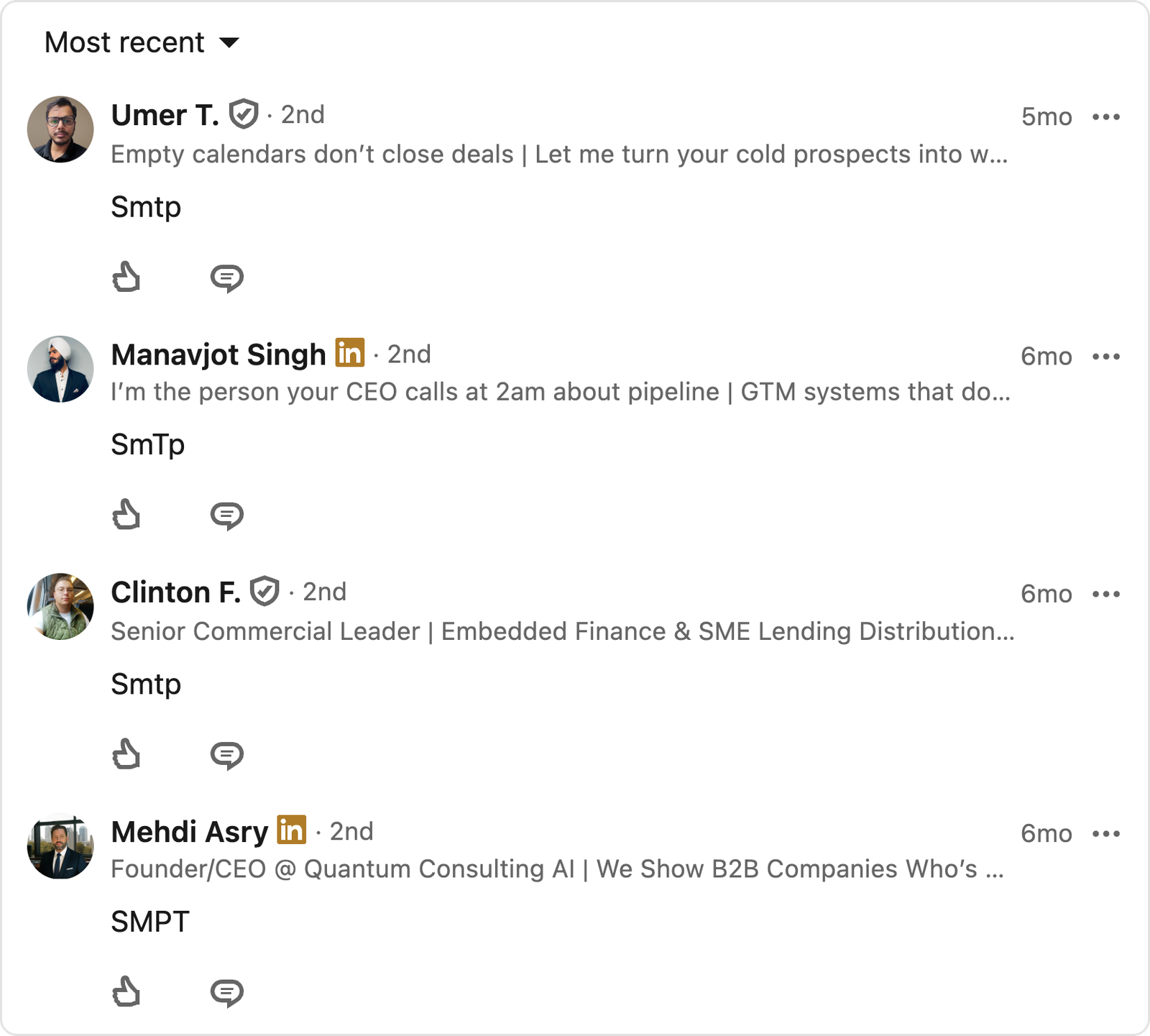
The offer also attracts people with a relevant problem. Someone asking for 300 inboxes is much more likely to have an active outbound use case than someone downloading a general sales checklist.
The commercial work happens after the comment. Deliver what you promised, understand what the person is trying to do and help them use what you gave them.
Then follow up on their experience. Did they get it running? What worked? Where did they get stuck?
You now have a reason to talk that comes directly from their business. And when the conversation turns to becoming a customer, they’ve had a chance to experience what you sell.